Pre-Seed — $750K
The Problem
The Catholic and Anglican liturgical music world employs thousands of trained musicians — organists, vocalists, choral directors, instrumentalists — yet has no professional infrastructure to connect them with parishes that need their skills. The entire hiring ecosystem operates through email chains, word of mouth, and informal Facebook community groups. No contracts, no payroll, no search, no professional profile.
This is not a niche problem. CMAA membership counts over 10,000 active practitioners. NPM (National Association of Pastoral Musicians) represents 8,000 more. Directors of music leave positions vacant for months because they cannot find vetted candidates. Musicians cobble together income from three or four part-time roles, each arranged through informal referral.
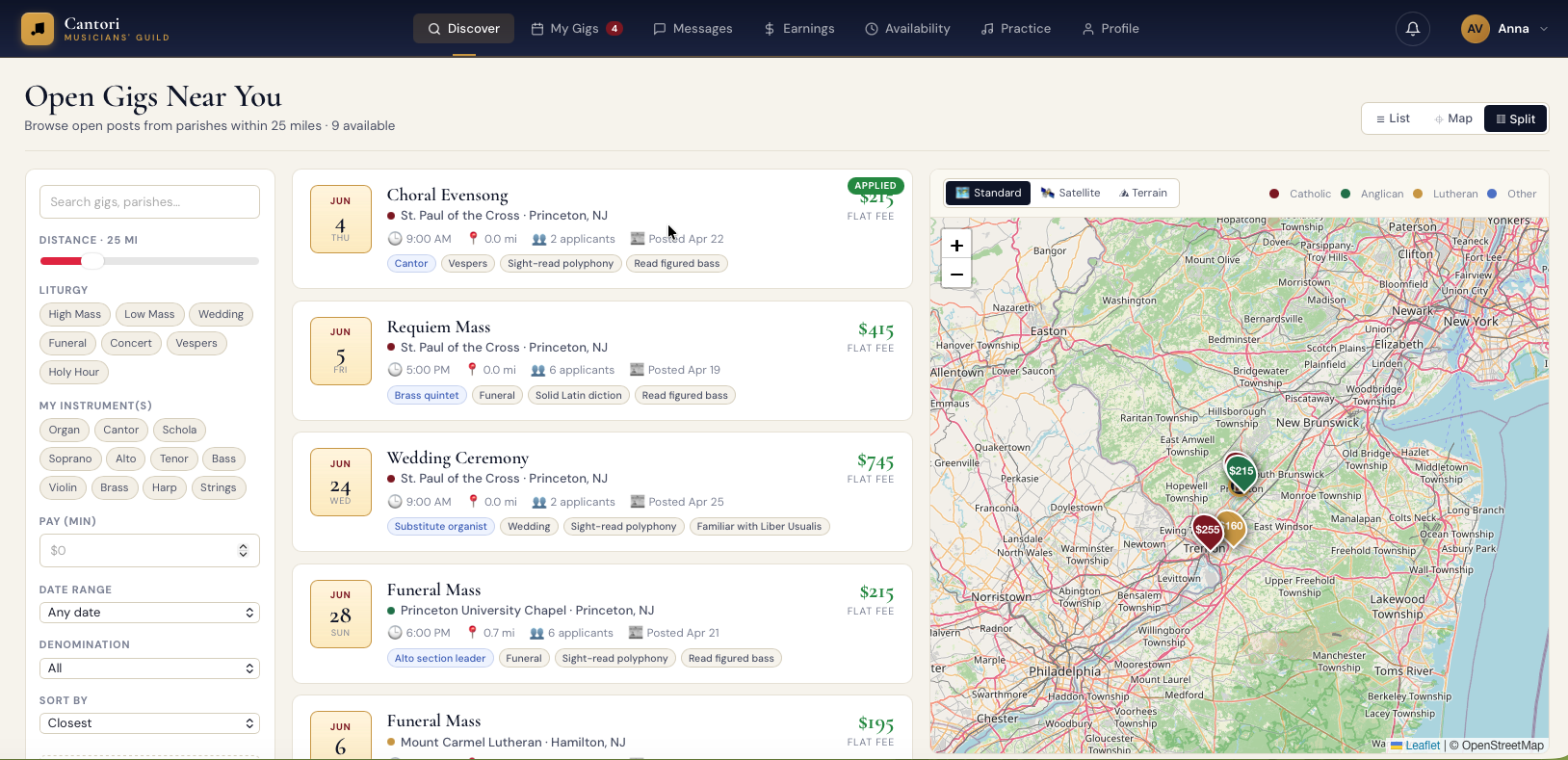
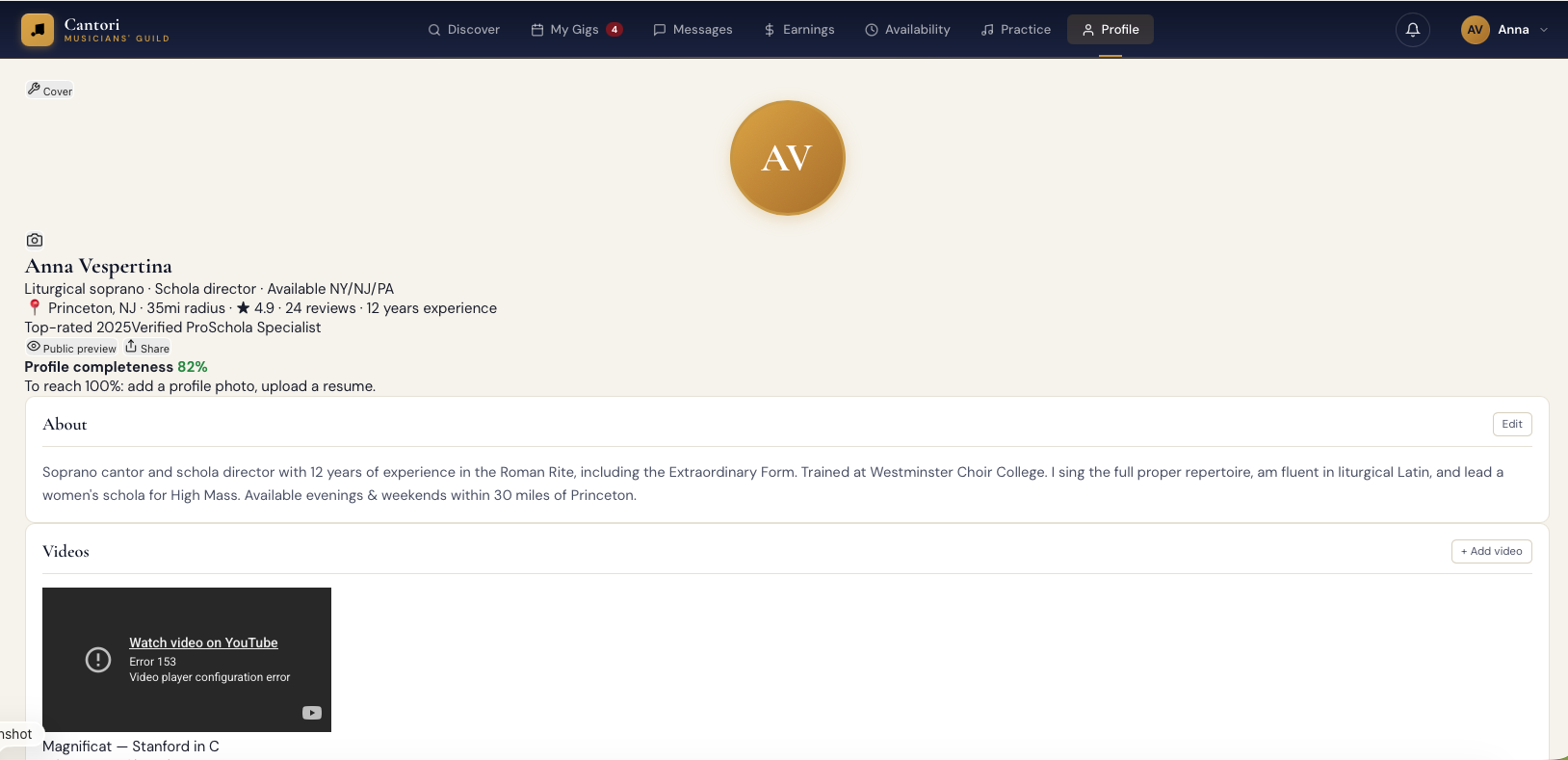
No professional search exists. There is no database of liturgically trained musicians filterable by voice type, repertoire knowledge, sacrament certification, or geography.
Disbursements are informal and untracked. Churches pay musicians via personal checks, cash envelopes, or Venmo. No 1099s, no contracts, no audit trail — a compliance risk for every parish.
Repertoire is not searchable. No tool understands the difference between the Ordinary and the Propers, Gregorian modes, or which musician can sight-read polyphony.
No CMAA/NPM-grade tooling. Existing freelance marketplaces (Upwork, Fiverr) are built for gig work, not for liturgical roles that require denominational fit, canon law compliance, and liturgical calendar awareness.
The Solution
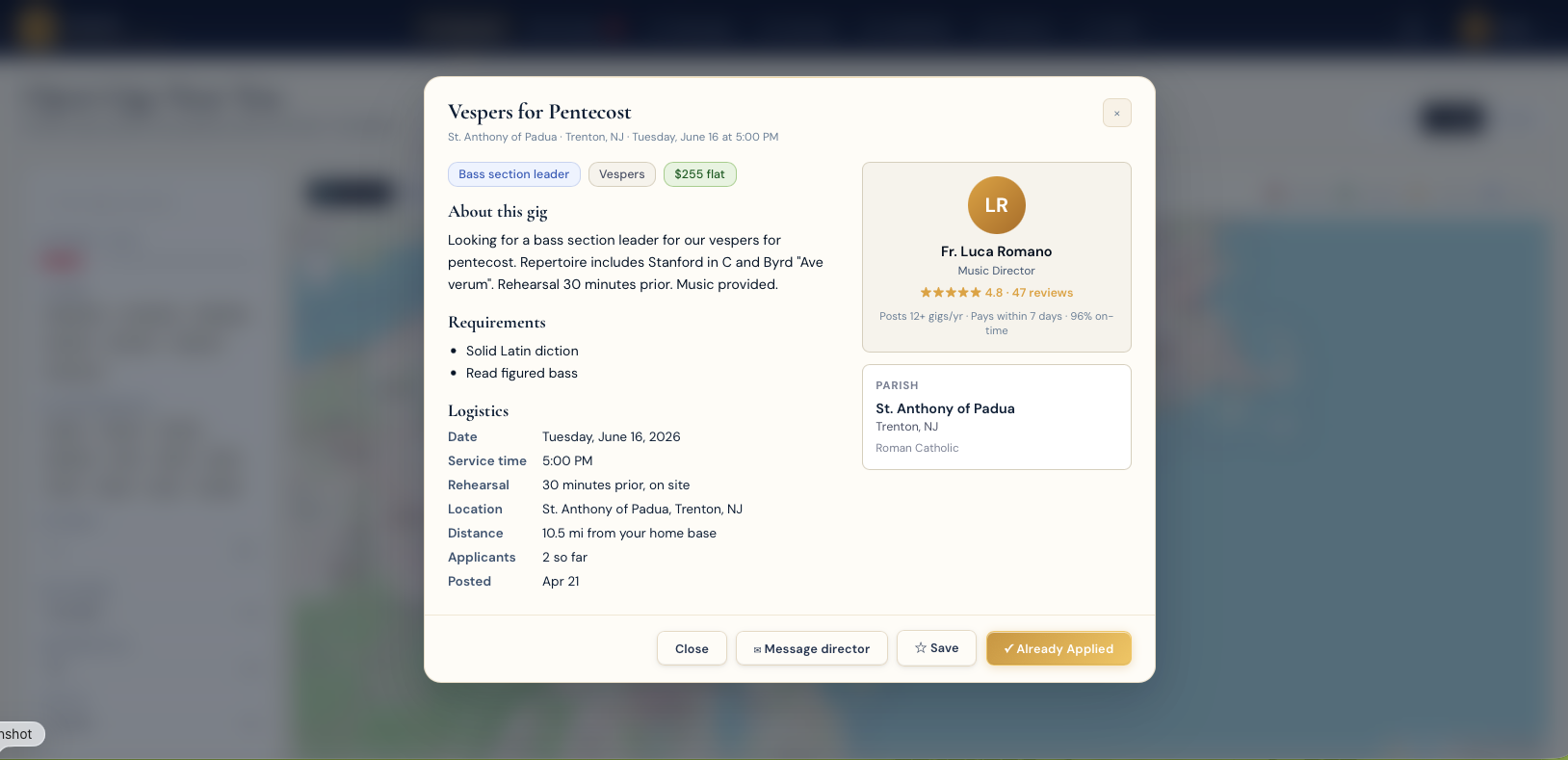
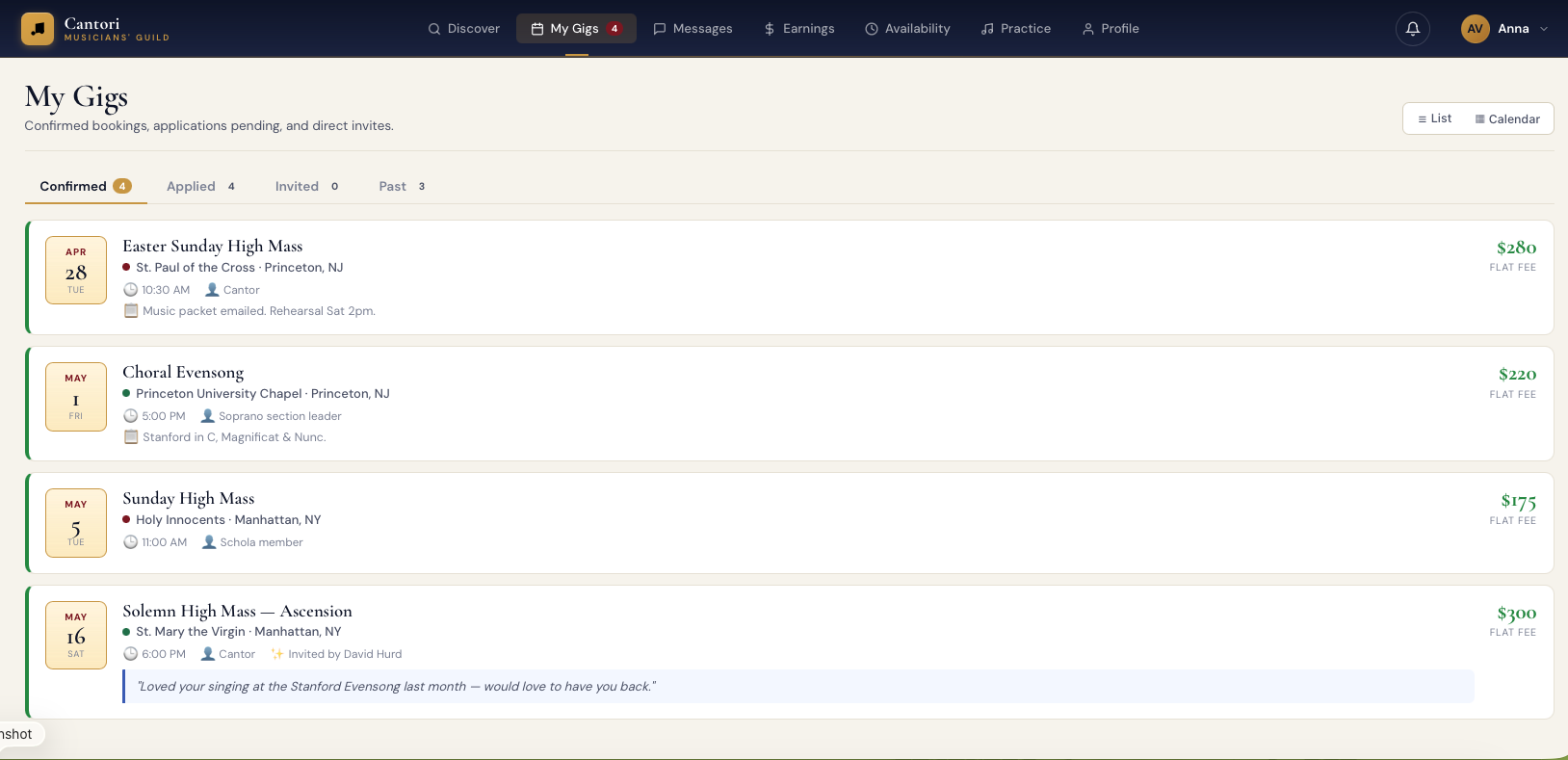
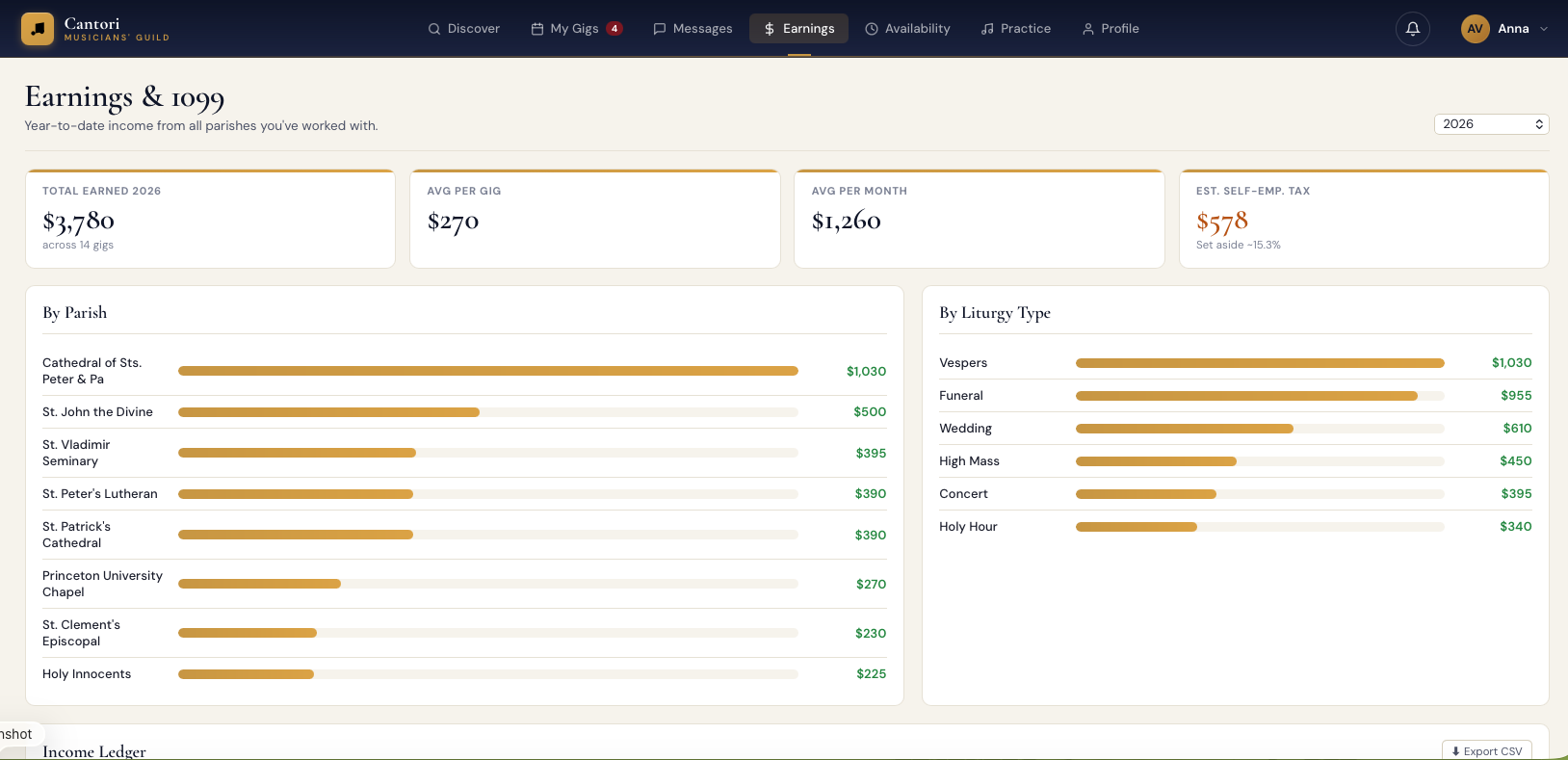
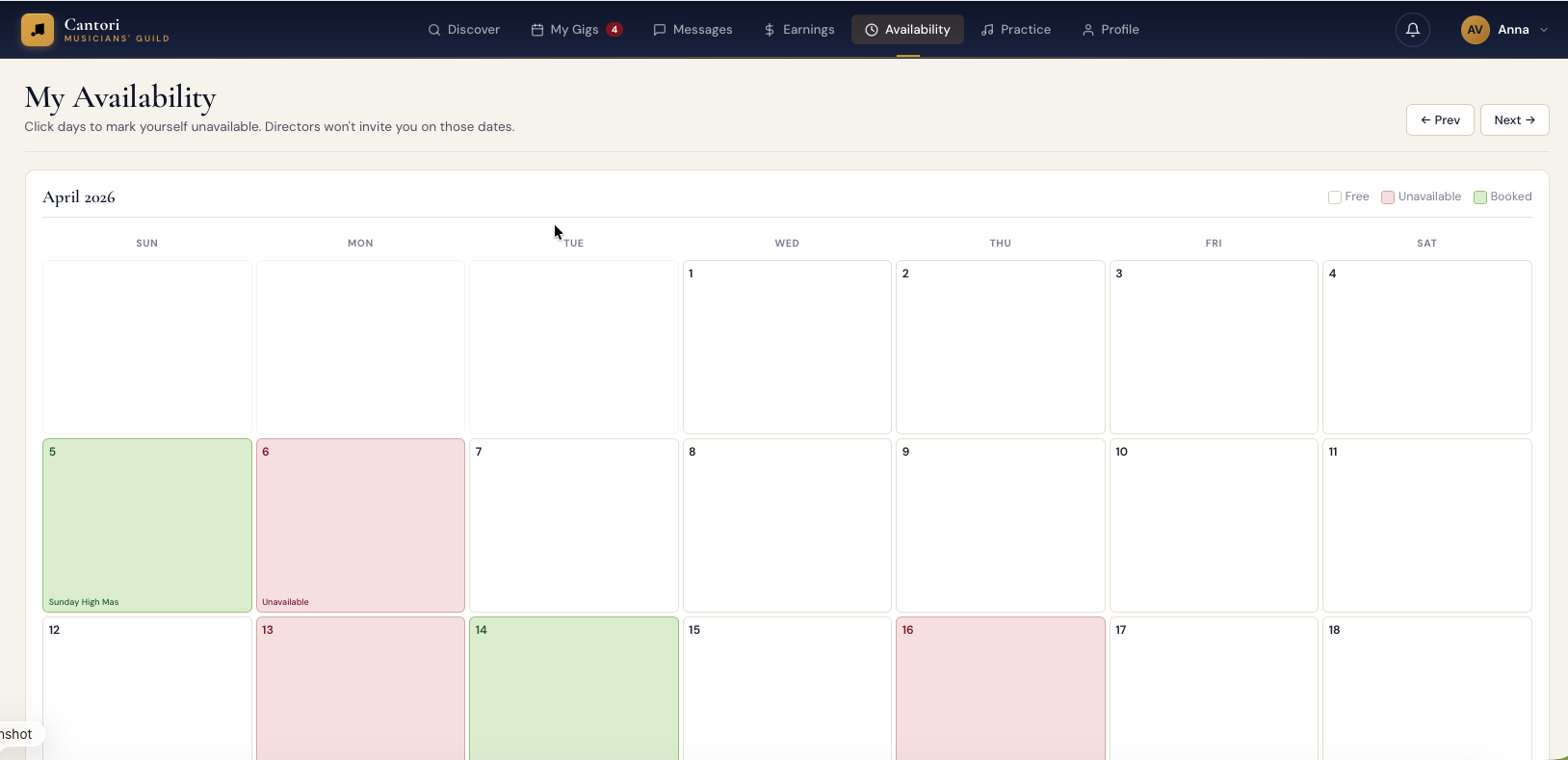
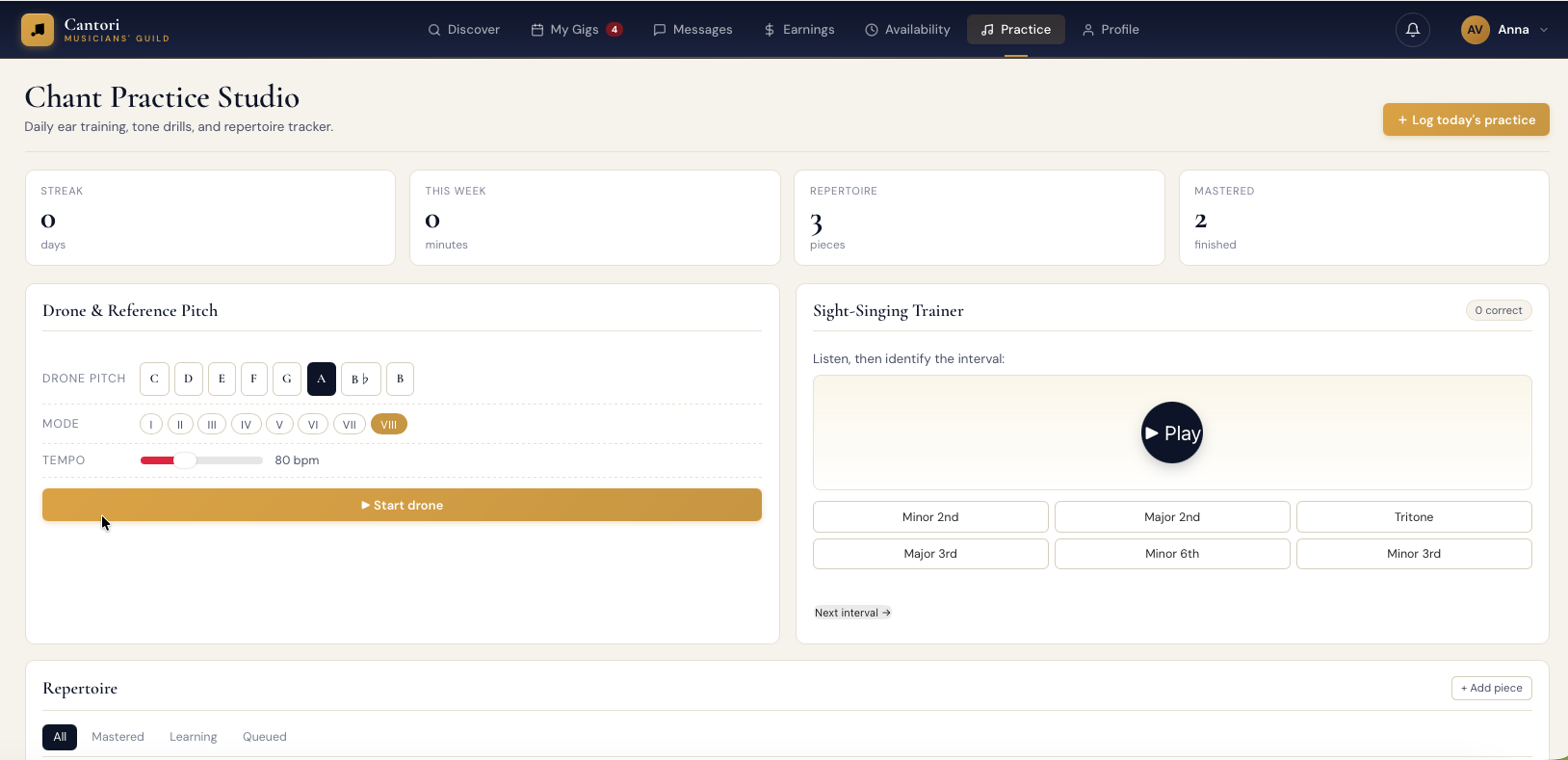
Cantori builds the professional layer the Catholic and Anglican sacred music world has never had: verified musician profiles, intelligent director tools, structured contracts, Stripe Connect payouts, and automated 1099 generation — all designed with the vocabulary and norms of the tradition.
Market
The wedge is Traditional Latin Mass (TLM) and high-church Anglican communities — roughly 3,000 US parishes with high musical standards, committed budgets, and acute musician shortages. These parishes have above-average director sophistication and willingness to pay for professional tooling.
Market math: 3,000 TLM/high-church parishes × average $4,000 annual music labor spend through platform × 5% take rate = $600K ARR from the wedge alone. Director subscription adds $360–600K. These are conservative figures for a single segment; the broader Catholic and Anglican market is 10× larger.
The wedge works because high-church communities are interconnected through CMAA, NPM, and diocesan networks — word of mouth travels fast. One cathedral using Cantori for the Triduum reaches every serious musician and director in the diocese.
Traction
9-church design partner pipeline. Churches identified and in active conversation for design partnership. Commitments expected pre-close.
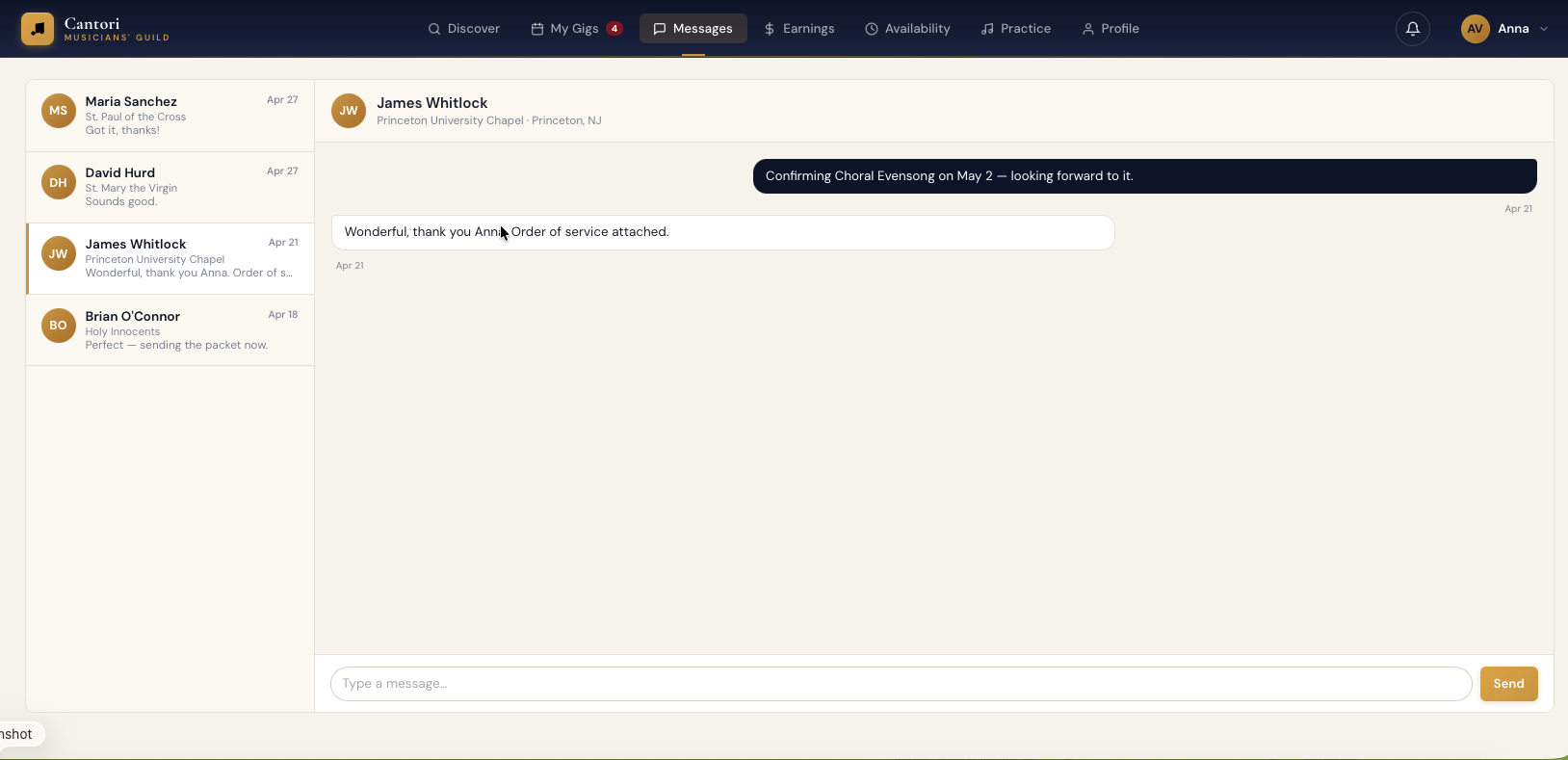
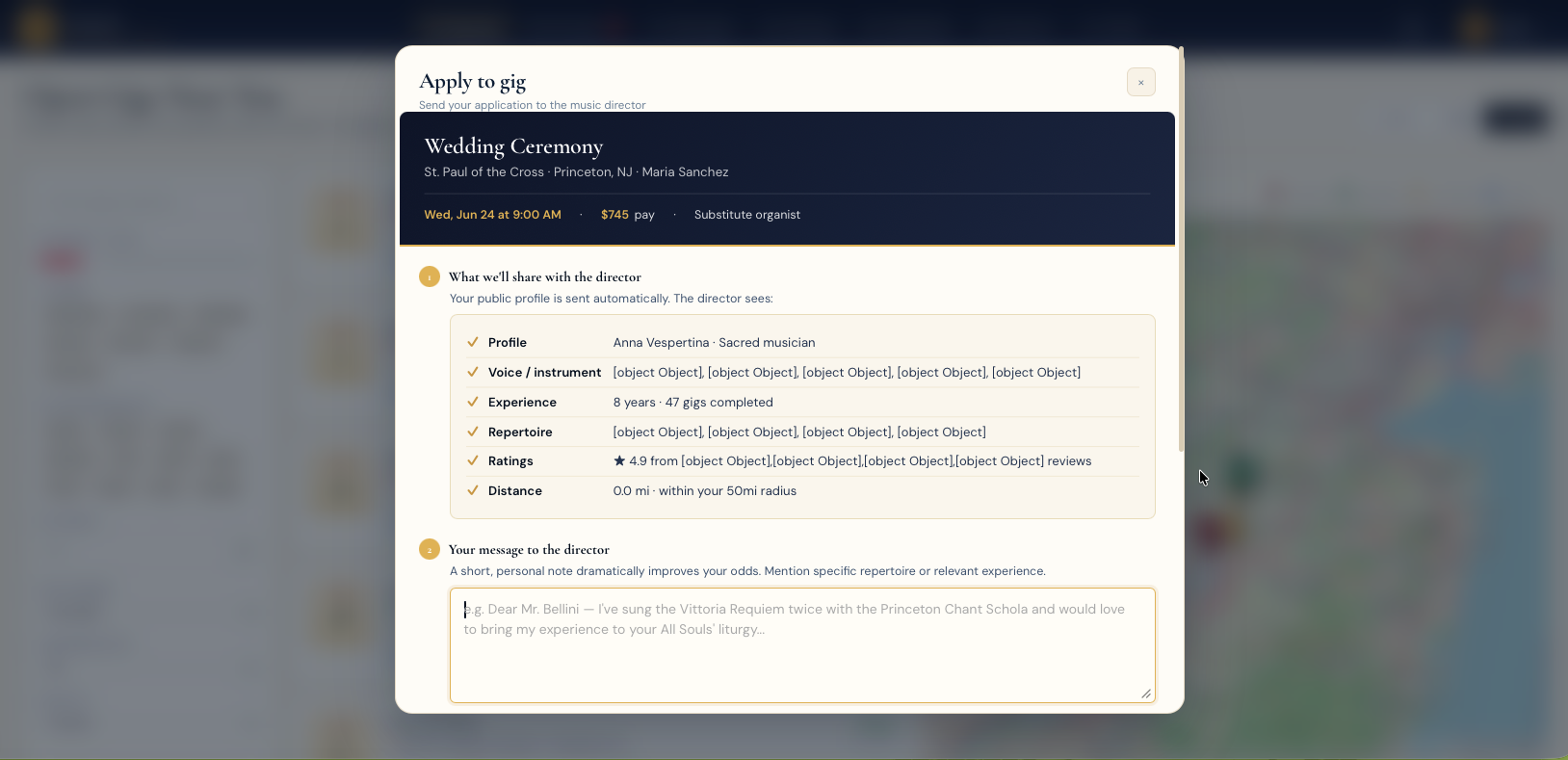
Working prototype. Core marketplace flows built: musician profiles, director search, engagement workflow, Stripe Connect integration in development.
Brand and public presence live. cantori.polsia.app is live with a full product narrative, brand identity, and community donation page operational.
CMAA network access. Founder has personal relationships with CMAA board-level contacts and active members — the core of the initial user base.
Catholic media relationships identified. Pathways to Catholicvote, EWTN Digital, and diocesan communications offices — low-cost distribution channels into the exact audience.
Donation community forming. Mission-aligned supporters actively contributing through the donation page, demonstrating community belief in the product.
Business Model
| Revenue stream | Structure | Target |
|---|---|---|
| Director Subscription | $30–$50/month per music director. Unlocks full search, contracts, scheduling, and analytics. | ~1,200 paying directors in year 2 = $540K ARR |
| Platform Fee on Payouts | 5–10% on all musician disbursements processed through Cantori. Stripe Connect handles splits automatically. | $2M gross payout volume × 7% = $140K ARR (year 2) |
| Musician Tier (free) | Free musician profiles drive supply-side liquidity. No charge to musicians at launch — keeps acquisition frictionless. | Network effect foundation; premium tier possible in year 3 |
Year 2 combined ARR target: $680K. Contribution margin is high — the platform is software-mediated with minimal per-transaction variable cost beyond Stripe fees. Unit economics improve rapidly with musician supply density.
Use of Funds
Founder
Guillermo is an insider. He did not discover the sacred music hiring problem by reading a market report — he lived it. A trained liturgical musician with years of experience in Catholic choral settings, he has been on both sides of the informal hiring system: scrambling to find qualified musicians for feast-day Masses, and navigating the fragmented network of referrals as a working musician himself.
That combination — practitioner knowledge of the tradition plus the technical ability to build the platform — is the rarest combination in any vertical marketplace. Domain credibility matters here in a way it does not in generalist software. CMAA members and parish music directors will trust Cantori because they trust someone who knows what a Propers setting is, who understands why a vocalist's sight-reading ability matters more than their streaming-era resume, and who can speak with parish administrators in the language of liturgy rather than startup jargon.
Guillermo is building this full-time. The market timing is favorable: post-pandemic, parish music programs are rebuilding and professional standards are rising. The combination of a qualified founder, a community-backed brand, and an acute problem with no existing solution is a pre-seed bet that makes sense.
Pitch Deck
The pitch deck covers the full product narrative, wireframes, competitive landscape, and 3-year financial model. Request access via email or schedule a call below.
Investor FAQ
Schedule a 30-minute call or reach Guillermo directly.